
Our CSR Webinars
Check out our webinars, replays, and upcoming sessions to start taking action on your CSR strategy.
Sign up for the next sessionPackaging that complies with the PPWR, for the long term
Since 12 August 2026, the EU Packaging and Packaging Waste Regulation (PPWR) applies to all packaging placed on the EU market. We map your packaging portfolio, assess its compliance, build your eco-design plan and equip you with a dedicated application to stay compliant over time.

480+ companies supported







Why act
now?
A regulation
already in force
Since 12 August 2026, the PPWR has applied directly across the EU: EU declaration of conformity, technical documentation and a ban on PFAS in food-contact packaging.
Learn more →Penalties on the way
Each Member State sets its penalties by 12 February 2027: administrative fines, but also withdrawal from the market or recall of non-compliant packaging.
Learn more →Requirements
that get stricter
Recyclability, recycled content, empty space, reuse: thresholds tighten in 2030, 2038 and 2040. Anticipating now means not having to redesign your packaging in a rush.
Learn more →Who is affected by the PPWR?
The regulation covers all packaging, whatever the material or origin: household, commercial or industrial. Your obligations depend on your role for each item of packaging, and a single company can hold several roles.

companies supported
customer satisfaction
of your packaging portfolio mapped
PPWR requirements, decoded for your packaging
The regulation sets five families of sustainability requirements: packaging must be less harmful, recyclable, contain recycled content, be minimised and, where relevant, reusable. Harmonised labelling and data traceability come on top.
A dedicated application
to stay compliant over time
PPWR 360, our application (currently in beta), centralises your compliance file and keeps it up to date: every new item, new supplier or regulatory change triggers a reassessment.

Packaging register
Families, items, components and suppliers brought together in a single register.
Dynamic compliance matrix
Statuses recalculated with every change: new item, new supplier or new rule.
Evidence register
Documents are linked to requirements, with expiry alerts and automatic document reading.
Document generation
Technical documentation and EU declarations of conformity, generated and versioned per packaging family.
Built-in regulatory watch
Regulatory deadlines are mapped onto your portfolio and rules are kept up to date by Altopi.
Dashboard and export
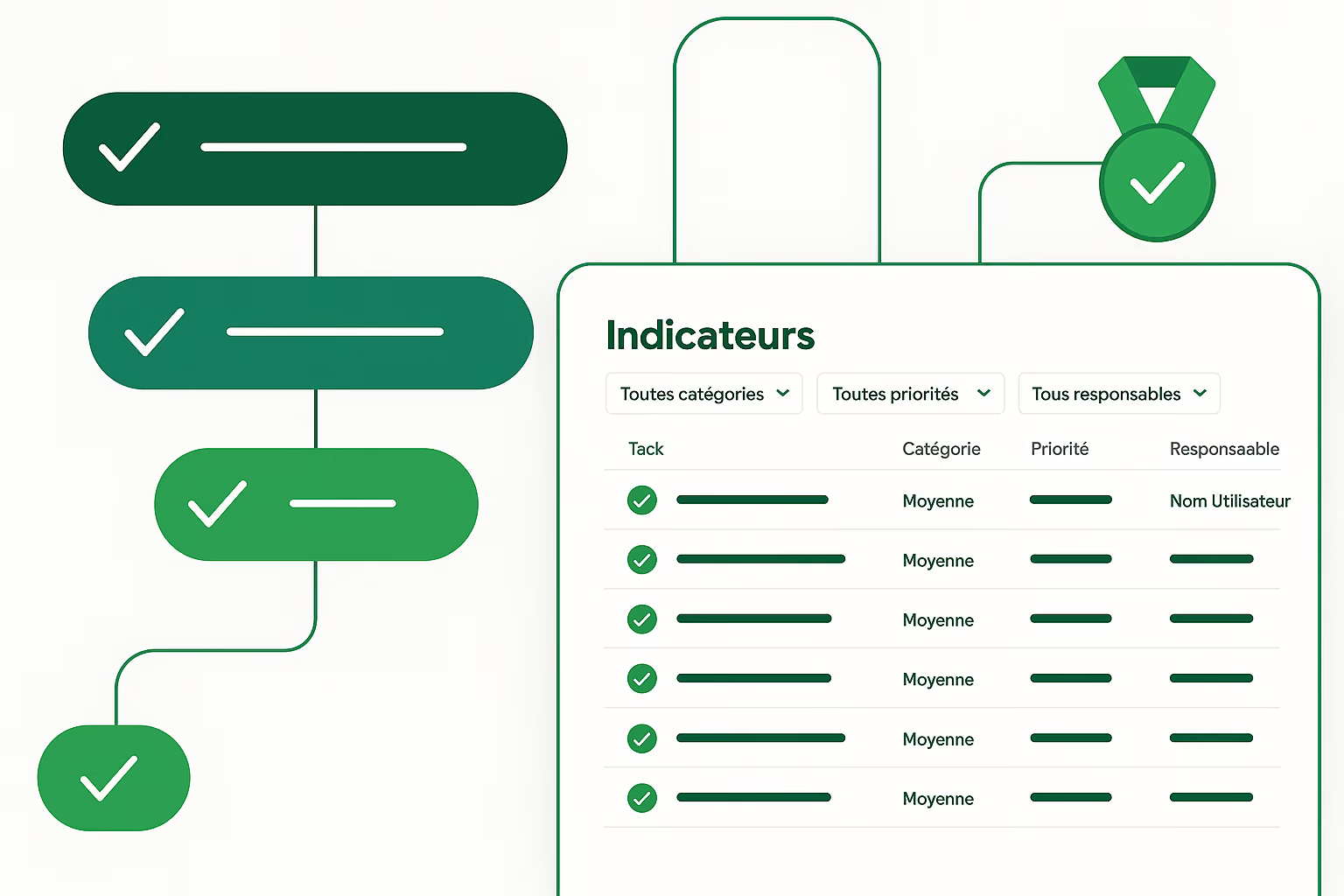
An overview of your compliance and one-click export of your file for authorities or customers.
The PPWR timeline, from 2026 to 2040
Obligations phased in over fifteen years: we map them onto your portfolio to prioritise the work. Some dates still depend on the publication of implementing acts.
Review my deadlines12 August 2026
The regulation applies
EU declaration of conformity and technical documentation required; PFAS banned in food-contact packaging.
12 February 2027
National penalties
Each Member State sets its penalties. Takeaway businesses must accept containers brought by customers.
2028
Harmonised labelling
February: compostable packaging (tea bags, coffee pods…) and a reuse option for takeaway. August: harmonised “materials” label to make sorting easier.
2029
Deposit return and reusable packaging
January: deposit return schemes for plastic bottles and cans (90% collection). February: “reusable” label with a QR code.
1 January 2030
Recyclability and recycled content
Recyclability grades A to C, 10 to 35% recycled content in plastic, empty space capped at 50%, banned formats and reuse targets.
2035
Recycling at scale
Packaging must actually be recycled at scale, not just be recyclable.
2038
Grades A and B only
Only recyclability grades A and B remain allowed on the EU market.
2040
Higher recycled content
Recycled content in plastic rises to 25 to 65%, depending on the type of packaging.
Concrete deliverables, ready for an inspection
Portfolio map, compliance matrix, replacement scenario report, dated roadmap, compliance file in the PPWR application (technical documentation, declaration templates, evidence register) and a presentation to your management committee. Pricing is on quotation, based on the size of your portfolio.

Why choose Altopi?
Regulatory experts
Our consultants follow the PPWR, its implementing acts and how it fits with French law (AGEC law, EPR schemes).
Consulting plus a tool
We don’t just hand over a report: your compliance file lives in an application your teams know how to keep up to date.
In-depth knowledge of SMEs and mid-sized companies
We understand your time, budget and organisational constraints. Our recommendations are realistic and actionable.
LCA and eco-design expertise
Our LCA experts assess your replacement scenarios to reduce the impact of your packaging without shifting the problem elsewhere.
A results-driven approach to CSR
Every action is chosen for its impact on your business, and its return on investment is measured. Your CSR budget becomes a managed investment.
Recognised expertise
Approved EcoVadis partner, Qualiopi-certified training provider, and EcoVadis Platinum medal holders ourselves.
What our clients say
Any questions?
Talk to a PPWR expert
from our team
- Paris
- Lyon
- Angers



Our 5-phase support
Scoping and mapping
We qualify your economic operator roles, inventory your packaging portfolio grouped into consistent families (material, function, market) and collect supplier and technical data.
Talk to an expert →Compliance assessment
We build the “packaging family × PPWR requirement” matrix: for each cell, the status (compliant, at risk, non-compliant, missing data), the applicable deadline and the priority level.
Talk to an expert →Compliance and eco-design plan
For non-compliant or at-risk families, we build replacement scenarios: change of material, recycled content, lightweighting, switch to reuse. You get a dated roadmap aligned with the regulation’s timeline.
Talk to an expert →Compliance in the PPWR application
We deploy the application and load your packaging register, compliance matrix and collected evidence. Technical documentation and EU declarations of conformity are generated per packaging family, and your teams are trained to work autonomously.
Talk to an expert →Monitoring and updates
With your application subscription, your file stays up to date. We support you through major reassessments: new product range, new LCA scenario, change of packaging strategy.
Talk to an expert →