In this month's CSR Update: A breakdown of the new "Ferme France" law and the national plan for funding the ecological transition 💶
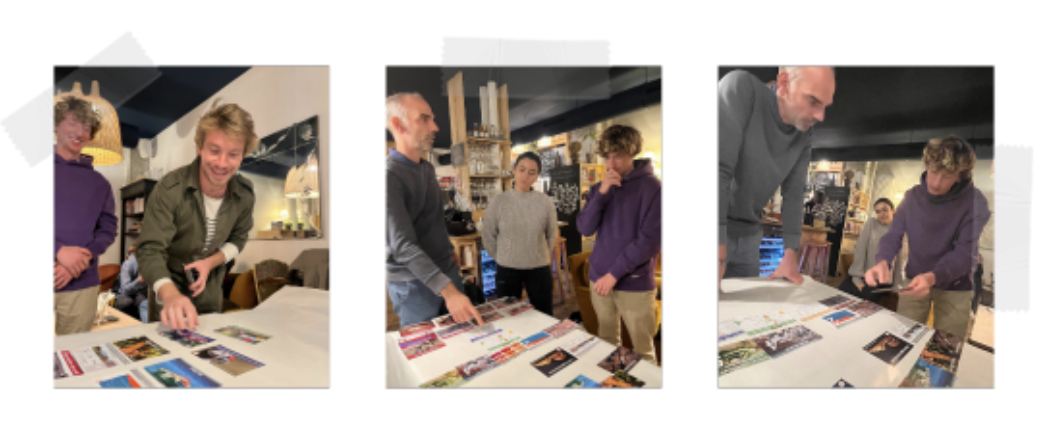
We’ll also be talking about Altopi; this month, we took part in a "Biodiversity Fresco" workshop, led by our CSR project manager, Toscan.
CSR NEWS ROUNDUP
CSR NEWS ROUNDUP
ALTOPI UPDATES
CSR UPDATE FEATURE
10 quick actions to adopt more sustainable eating habits in your company! 🥗
Authorizing pesticide spraying by drone, promoting mega-basins, and allowing the government to override ANSES decisions—that’s the bill the Senate passed last May.
Its name: Law for a competitiveness boost for French agriculture.
As Le Monde puts it, "[French agriculture] which, by the way, looks less and less like a farm and more and more like a factory."
🎯 The goal of the law: to protect farmers from unfair competition
The controversial articles:
- Article 8: Despite being banned since 2009 due to risks of airborne dispersion and public exposure, aerial pesticide spraying by drone is once again authorized through exemptions. ❌
- Article 15: Mega-basins are now classified as being of major public interest, with the law supporting an active policy of water storage to guarantee irrigation. ❌
(If you’re wondering why this is a bad idea, check the link in the comments)
- Article 13: Allows the Minister of Agriculture to ignore decisions made by the French Agency for Food, Environmental and Occupational Health & Safety (ANSES). This is the agency in charge of pesticide regulation. ❌
- Article 11: Postponing by 3 years the requirement to serve at least 20% organic products in public catering establishments (schools, etc.) ❌
👉 These articles show that the French "Loi Ferme" fails to address environmental issues and imperatives and cannot be passed without harming the environment and the health of the French people.

The 2024 budget has been introduced to the National Assembly.
The ecological transition has been granted an additional €7 billion, bringing the total to €40 billion.
2 main funding pillars:
More transparency: The government has committed to publishing progress reports on the ecological transition funding strategy twice a year.

The Altopi team participated in the Biodiversity Collage workshop, led by our CSR project manager, Toscan.
The goal of the workshop is to understand the system that not only feeds us but also sustains biodiversity. It highlights the current erosion of biodiversity.
We loved the little stories that help explain the disruptive role humans play in this fragile balance. (Especially the one about scallop fishing in North Carolina!)
We're sharing the story of scallop fishing in North Carolina because it perfectly reflects the human impact on biodiversity:
North Carolina was long a major hub for scallop fishing. In the 1920s, over 600,000 kg were caught annually. By the 1990s, North Carolina scallop fishermen observed a collapse in the scallop population. Why?
Overfishing of sharks (-95% in number, sought after for their meat and fins). Sharks eat cownose rays. With the reduction in the shark population, the number of cownose rays increased. Cownose rays feed on scallops.
This story clearly illustrates the impact of human overexploitation of resources on biodiversity.
Food has a huge impact on the carbon footprint of the French. It actually accounts for 1/4 of the average person's annual emissions (ADEME)! 🤯
There are solutions to lighten the impact of food on your employees' carbon footprint!
Merci d'avoir lu le Point RSE. Nous vous donnons rendez-vous le mois prochain !

Your company's sustainable performance