Eco-design made simple: definition, steps, examples, and common pitfalls. Discover why an LCA helps you identify the right levers for success.


Eco-design can seem a bit vague at first: you know you need to do better, but you aren't always sure what to prioritize. In this article, we break down eco-design in plain language, provide a practical method, and show you why LCA (Life Cycle Assessment) is often the key to avoiding mistakes and choosing the right levers.
Eco-design is an approach aimed at reducing the environmental impact of a product, service, or process throughout its entire life cycle: raw material extraction, manufacturing, transport, use, and end-of-life.
The goal isn't just to "green" a visible element, but to improve overall environmental performance without compromising quality, functionality, or user value.
In other words, eco-design is about designing better from the start by integrating environmental considerations on the same level as cost, quality, and performance.
For SMEs and mid-caps, eco-design is no longer optional. It has become a strategic lever driven by several factors:
• Customer demands and tenders: clients are increasingly requiring quantifiable and comparable evidence.
• Responsible procurement: purchasing departments are looking to reduce impacts across the entire value chain.
• Regulations and reporting: CSRD, environmental labeling, sector-specific requirements, and more.
• Innovation and differentiation: when structured correctly, eco-design can become a real competitive advantage.
As for funding, there are programs available to support businesses. For example, the Bpifrance Eco-design Diagnostic has an indicative out-of-pocket cost of around €5,400 (excl. tax) for companies with fewer than 50 employees (subject to conditions) and €7,200 (excl. tax) for those with 50 to 250 employees. This allows you to structure the process without having to handle everything in-house.
Many companies start with isolated optimizations: changing packaging, reducing transport, or swapping out a material.
These actions can be useful… but they can also shift the impact rather than reduce it.
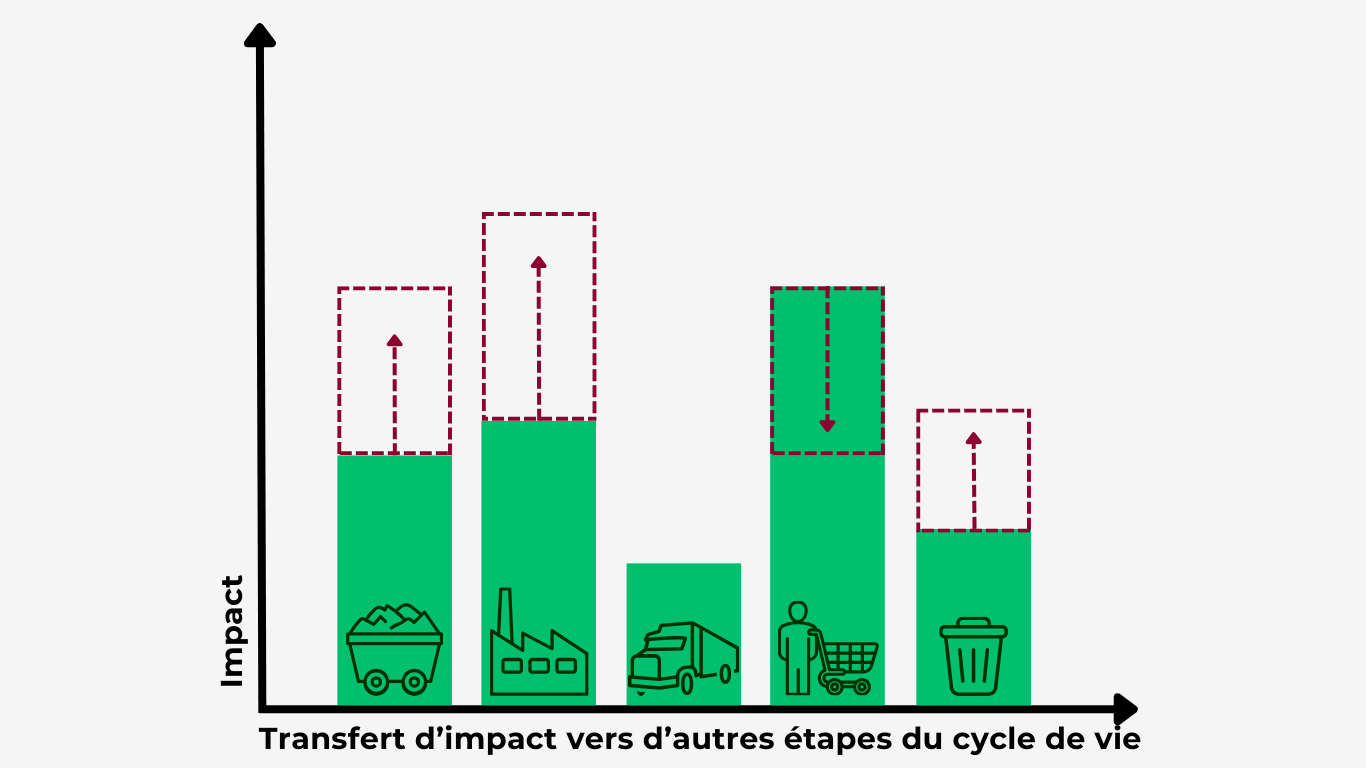
A classic example: reducing a product's packaging might seem virtuous, but if it leads to more breakage during transport, the overall impact could actually increase.
Eco-design, on the other hand, considers the entire life cycle and multiple environmental impacts (climate, resources, water, etc.).
It is precisely to avoid these "false good ideas" that a life-cycle approach and LCA are essential.
Before we start, we need to clarify the goal:
• Comparing two technical options?
• Responding to a client request?
• Reducing the impact of an existing product?
• Designing a new offering?
A clear scope helps define:
• The boundaries,
• The level of detail,
• The necessary data,
• The stakeholders to involve.
Proper scoping prevents back-and-forth and speeds up decision-making.
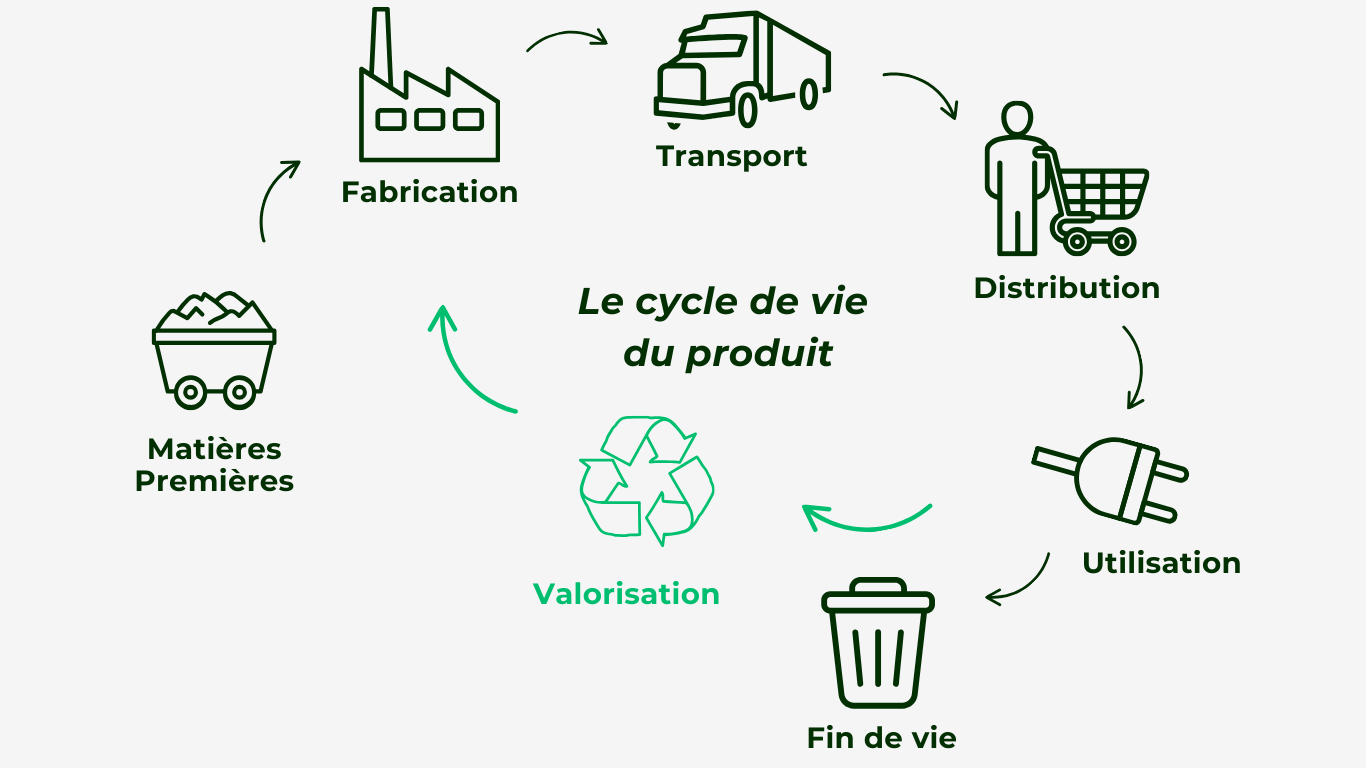
Next, we create a simple map of the life cycle stages: raw materials → manufacturing → distribution → use → end-of-life
This step helps identify key flows, stakeholders, available data, and areas of uncertainty.
To design better, you first need to understand where the impacts are.
This is the key step! An LCA (Life Cycle Assessment) allows you to evaluate the environmental impacts of a product or service throughout its entire life cycle, using multiple criteria.
The goal of the diagnostic isn't perfect data, but rather to spot environmental impacts, prioritize actions, and avoid misleading assumptions. In many cases, the biggest impacts aren't where you'd expect them to be.
Without an LCA, you risk optimizing what’s visible… rather than what actually matters.
To understand the method in detail and learn how to conduct an LCA, check out our dedicated article: LCA: what is it, and where do I start?
Once you’ve identified the main impact areas, you can come up with concrete solutions for each stage of the lifecycle:
• Raw materials: incorporate recycled or more sustainable materials (e.g., natural or recycled fibers).
• Manufacturing: focus on repairability, reduce waste, optimize processes, and consider reshoring if it makes sense.
• Distribution: reduce or optimize transport and switch to recyclable packaging.
• Use: lower energy or consumable usage and provide better guidance to users (proper use and maintenance).
• End of life: design for recyclability (mono-materials), reuse, and ease of disassembly.
When multiple scenarios are possible (A vs. B), a comparative LCA allows you to compare them on a level playing field: same function, same lifespan, same boundaries, and same assumptions. This is the stage where you secure your technical and strategic choices.
An eco-design process must be traceable and credible. Document your assumptions, keep your results (especially LCA data), and formalize your methodology to back up your decisions and justify them when needed. Then, prepare clear and transparent communication: this makes it easier to respond to clients and tenders, avoids greenwashing, and allows you to capitalize on the lessons learned internally.
Eco-design is primarily about choosing the right levers. And that’s where an LCA (Life Cycle Assessment) becomes essential. Without an LCA, you often end up optimizing what’s most visible—like packaging or transport—while missing the major impacts related to materials, manufacturing, or usage. Decisions then end up being based on intuition.
With an LCA, you identify the real impact hotspots, prioritize actions, compare scenarios, and secure your choices. You can also prove your gains and build credibility with clients and partners.
In eco-design, the hardest part isn't coming up with ideas, but knowing which ones will actually make a difference. A well-structured LCA allows you to make decisions based on facts and avoid going down the wrong path.
To learn more, check out the replay of our webinar dedicated to LCA.
Eco-design isn't just a series of small, isolated optimizations: it’s a structured approach aimed at taking action where the impact is truly the greatest. By relying on a lifecycle approach and a well-framed LCA, you can prioritize the right levers, secure your decisions, and prove the results. A simple method, solid data, and transparent communication are often all it takes to turn eco-design into a real driver of performance and innovation for your company.

Your company's sustainable performance